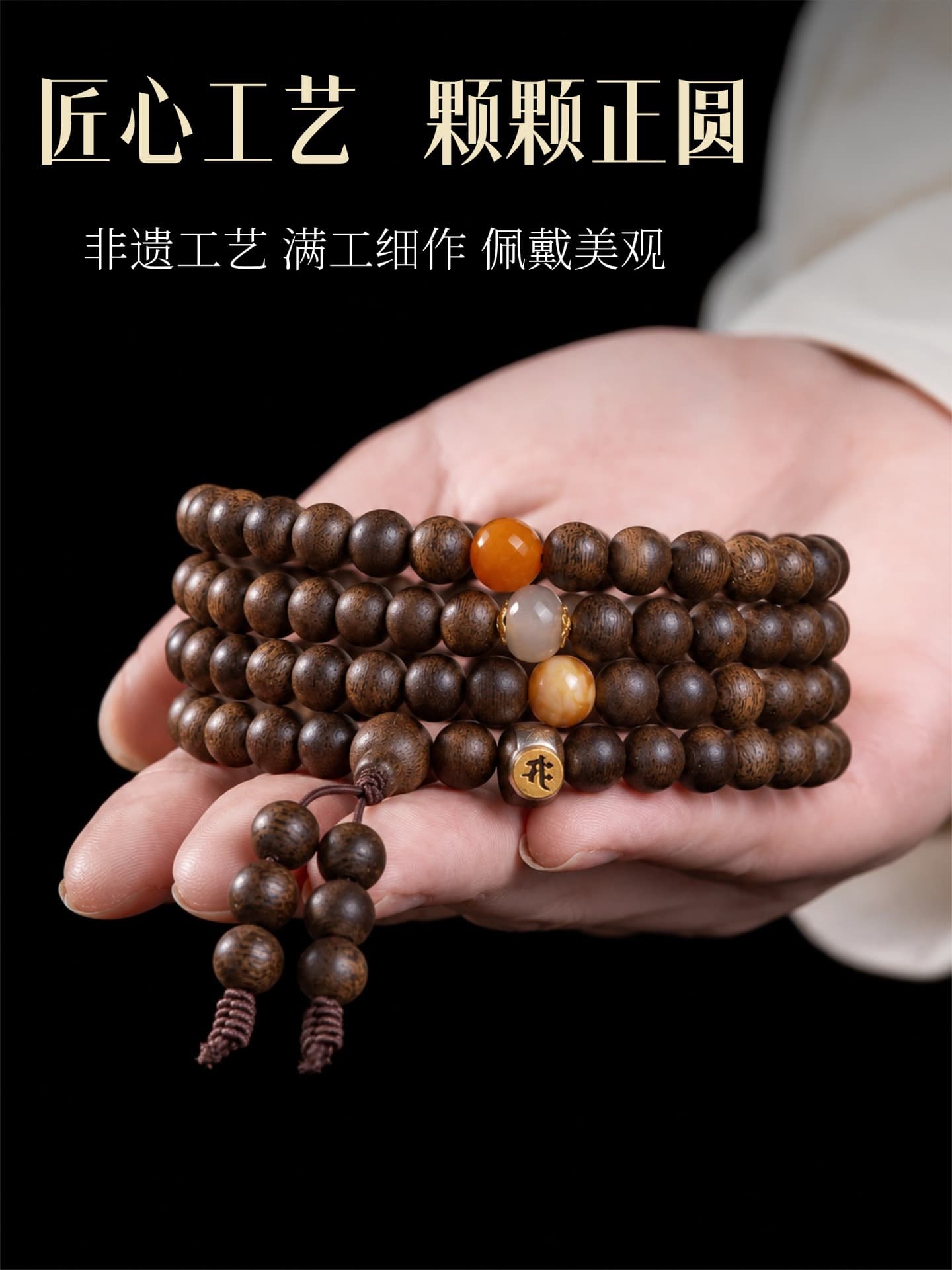
A fresh strand of red sandalwood beads comes out of the workshop matte, almost shy. Six months later, in the hands of someone who knows the art of pán wán, the same strand glows like amber — deep burgundy, glass-smooth, unmistakably alive. That transformation is called patina, and unlike machine gloss, it cannot be bought. Only earned.
What Patina Actually Is
Patina is the meeting of wood and time. Dense woods like red sandalwood hold natural oils deep in their grain. Gentle, repeated friction from your hands draws those oils toward the surface, where air slowly oxidizes them into a thin, hard glaze. Color deepens at the same time — purple-brown drifting toward near-black with ruby undertones. You're not coating the wood. You're coaxing out what it already holds.
The Patient Method, Step by Step
- Weeks 1–2: rub the strand daily for 15–30 minutes with a clean soft cotton cloth or white cotton glove. This pre-polishes every bead and lifts surface wax. Never skip straight to bare hands.
- Rest for 3–7 days. Set the beads aside in a shaded drawer. Freshly drawn oils need air to oxidize and set — this pause is where the first true glaze forms.
- Move to clean, dry hands. Short sessions only, 20–30 minutes, rotating each bead between your fingers. Hands should feel dry, never sweaty.
- Alternate play and rest. Two weeks of gentle handling, then a week in the drawer. Collectors call this letting the beads "breathe" — the cycle builds depth far better than constant wear.
- After 2–3 months you'll notice the shift: light reflecting softly instead of scattering. A year in, the strand reads like lacquer. Decades in, like jade.
The Enemies of Patina
- Water — leaves pale rings and raised grain spots. Remove before washing hands; if soaked, wipe dry immediately and let it recover slowly.
- Sweat — salt and moisture leave a dull, sticky film that must be re-polished away with cloth.
- Perfume and alcohol — strip oils and deaden the developing glaze. Spray first, wear after.
- Sunlight and heat — dry the wood and cause fine cracks. Store shaded and room-temperature.
- Dirty hands — gray grime settles permanently into open grain. Clean hands, always.
There Are No Shortcuts
Machine-tumbled beads can be buffed glossy in an afternoon, and that shine dies just as fast — it's cosmetic, sitting on top of the grain. True patina lives inside the surface and survives decades of wear. The slowness isn't an obstacle to enjoying your beads; in the Chinese tradition, it is the enjoyment — fifteen quiet minutes a day, a ritual as much as a maintenance routine.
You don't finish a bracelet. It finishes you.
Wear the story yourself
Hand-finished wooden bead bracelets, crafted in Xianyou and shipped worldwide.
EXPLORE THE COLLECTION